If you're building a pool in Delaware, you need a fence around it. It's not optional — it's the law. Pool barrier requirements exist to prevent drowning, particularly among young children. Every year, preventable tragedies happen because pool areas weren't properly enclosed.
Here's everything Delaware homeowners need to know about pool fence requirements, from height and gate specs to the best materials and permit processes.
Delaware Pool Fence Code Overview
Delaware follows the International Swimming Pool and Spa Code (ISPSC), which sets minimum safety standards for residential pool barriers. These rules apply to:
- In-ground swimming pools of any size
- Above-ground pools with water depth greater than 24 inches
- Hot tubs and spas that are not equipped with a locking safety cover meeting ASTM standards
The code requires that all residential pools be completely enclosed by a barrier — meaning a fence, wall, or combination of both that prevents unsupervised access, especially by children under 5 years old.
Height Requirements
The minimum fence height for pool enclosures in Delaware is 48 inches (4 feet) measured from the finished grade on the outside of the fence.
Key details:
- 48 inches is the legal minimum — but many installers (including us) recommend 54–60 inches for additional safety
- The measurement is taken from the outside grade, not the pool deck side
- If the ground slopes, the fence must meet the 48-inch minimum at every point along its length
- The fence design must have no handholds or footholds that a child could use to climb. This means no horizontal rails on the outside of the fence, no decorative elements that create steps, and no attached structures (planters, benches) within 3 feet of the fence
Gate Requirements
Pool fence gates are where most code violations happen. Delaware requires all pool gates to meet these specifications:
- Self-closing: Every gate must close and latch automatically from any open position. No propping open allowed
- Self-latching: The latch must engage automatically without any action from the person walking through
- Latch placement: The latch must be on the pool side of the gate, or if on the outside, it must be at least 54 inches from the ground — out of reach for young children
- Gate direction: Gates must open outward, away from the pool area
- Latch mechanism: Must not be easily defeated by a child — simple lift latches at child height do not meet code
We install self-closing, self-latching gate hardware on every pool fence. It's a non-negotiable safety feature.
Spacing Requirements
The gaps in your pool fence matter just as much as the height. Delaware code specifies:
- Vertical members (pickets): Gaps cannot exceed 4 inches — this prevents a small child's head from passing through
- Bottom clearance: The space between the bottom of the fence and the ground cannot exceed 4 inches
- Chain link mesh: If using chain link, the mesh openings must be no larger than 1.75 inches (standard 2-inch chain link does NOT meet code — you need a smaller mesh size)
- Decorative patterns: Any openings in the fence pattern that could serve as handholds or footholds are not permitted below 48 inches
This is why standard residential picket fences (with 3.5-inch spacing) often don't meet pool code — you need a fence specifically designed for pool enclosures.
Best Materials for Pool Fences in Delaware
Not every fence material works well around a pool. Here's how the options compare:
Aluminum Ornamental Fencing
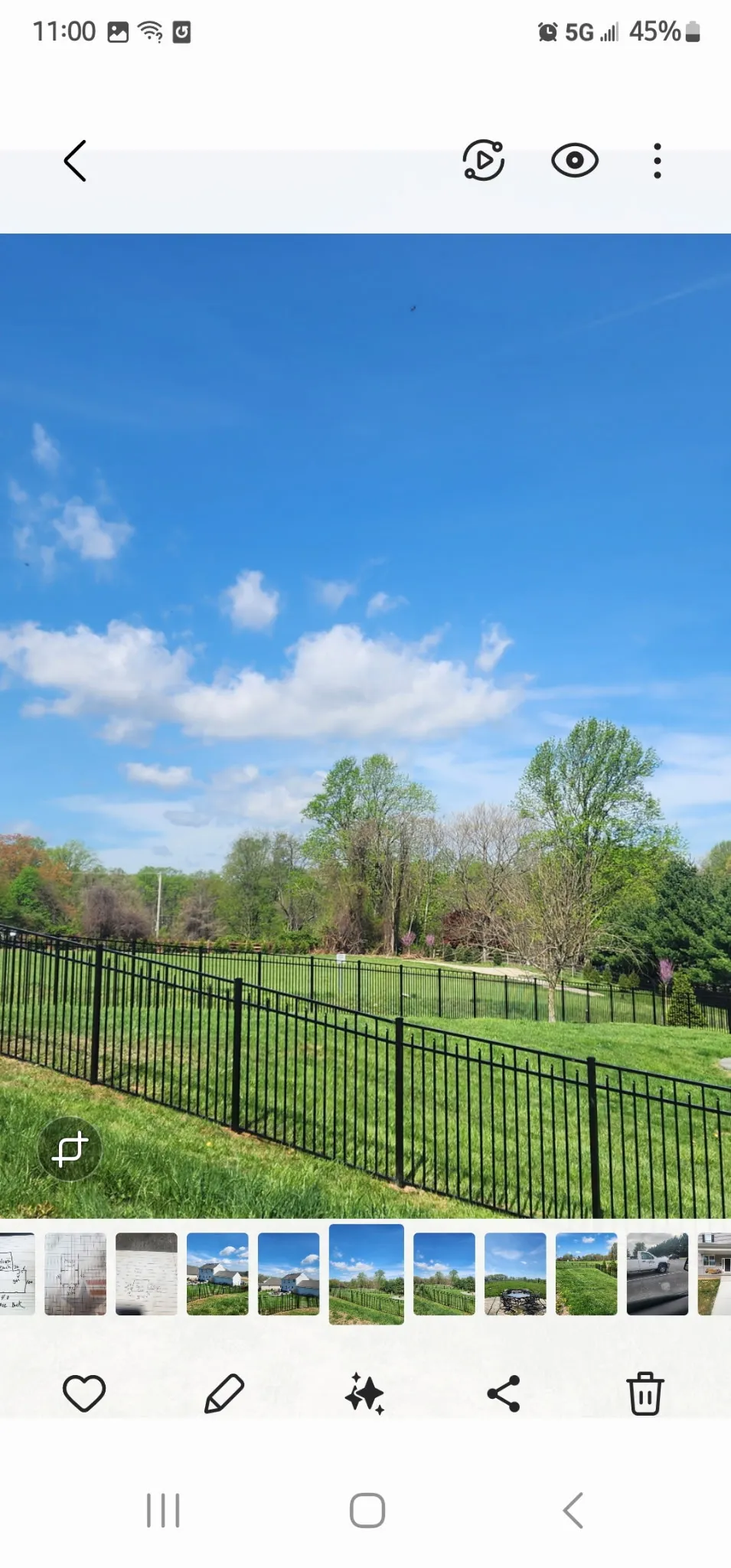
The most popular choice for pool enclosures. Aluminum fencing is specifically manufactured in pool-code-compliant configurations with the right picket spacing. It won't rust or corrode from pool chemicals or splash water. The ornamental look complements most pool landscapes, and it requires virtually zero maintenance.
Chain Link Fencing
Chain link is the most affordable pool fence option. However, you must use a smaller mesh size (1.75 inches or less) to meet code — standard residential chain link won't pass inspection. Vinyl-coated chain link in black or green looks better than standard galvanized around a pool area.
Vinyl Fencing
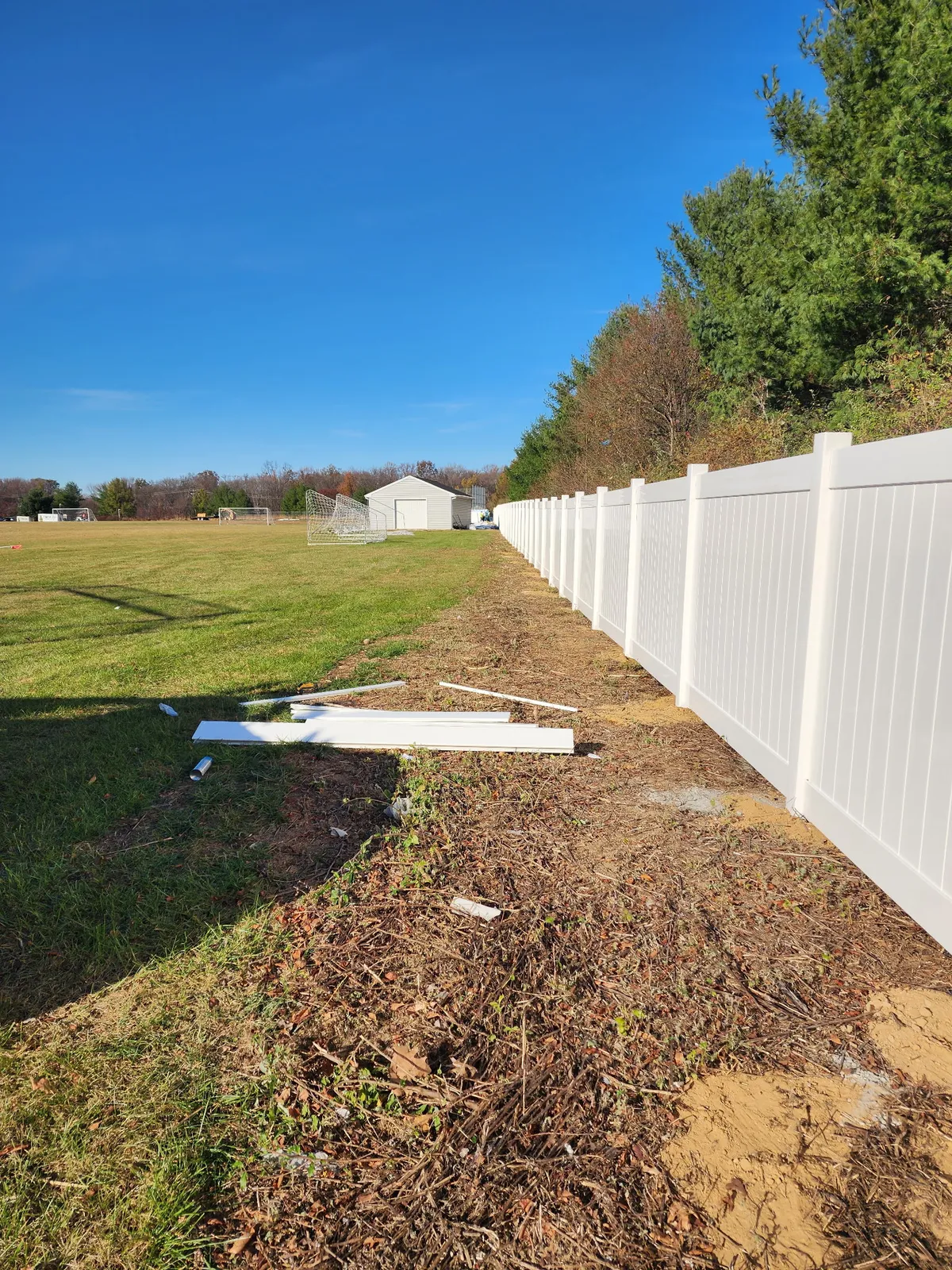
Vinyl fencing is an excellent choice if you want privacy around your pool. It handles moisture and pool chemicals without any degradation. No painting, staining, or rust. The downside is higher cost, but many homeowners consider the privacy worth it.
Wood Fencing
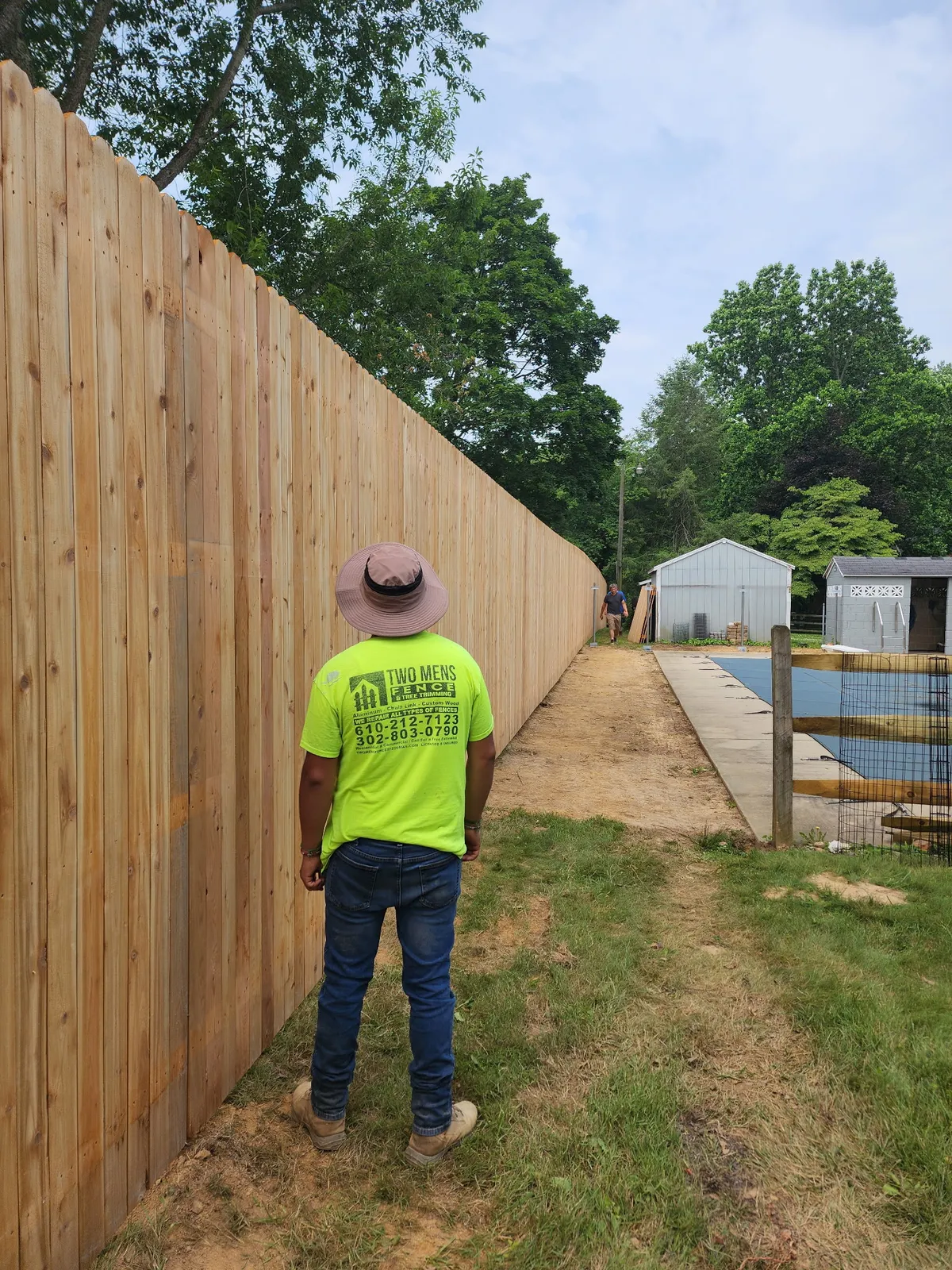
Wood works for pool fences but requires more maintenance in the splash zone. Constant exposure to moisture and pool chemicals accelerates rot and warping. If you go with wood, pressure-treated lumber is essential, and plan on more frequent staining/sealing.
What About the House Wall?
Many pool installations use the house wall as one side of the pool barrier. Delaware code allows this, but with important conditions:
- Doors opening to the pool area: Any door from the house that opens directly to the pool enclosure must have a self-closing device, a self-latching lock, or an audible alarm that sounds when the door is opened
- Sliding glass doors: Must be equipped with an alarm that triggers when the door is opened, or a self-closing/self-latching mechanism
- Windows: Windows that open to the pool area and are within 48 inches of grade must not open more than 4 inches, or must have a screen that requires a tool to remove
If you're planning to use your house as part of the pool barrier, make sure all entry points are properly equipped before your inspection.
Permit Requirements
Pool fences in Delaware typically require their own permit, separate from the pool construction permit itself:
- Permit timing: The fence permit is often applied for at the same time as the pool permit, but the fence must be inspected and approved before the pool can be filled and used
- Inspection required: A building inspector will verify fence height, gate operation, spacing, and overall code compliance
- New Castle County: Permits through the Land Use Department — fence and pool inspections are coordinated
- Kent County: Permits through the county or city (Dover) planning office
- Sussex County: Permits required — coastal areas may have additional wind-load specifications for the fence
Do not fill your pool before the fence inspection. An inspector who finds an unfenced, filled pool can issue a stop-work order and fines.
Common Pool Fence Violations
We've seen plenty of pool fence installations that fail inspection. The most common violations include:
- Fence too short: Measured from the wrong side or on sloped ground
- Gate doesn't self-close: The most frequent failure — hinges too loose, gate drags on the ground, or closer mechanism is missing
- Latch too low: Exterior latches below 54 inches from grade
- Gaps too wide: Picket spacing exceeds 4 inches, or bottom clearance is too large
- Climbable horizontal rails: Fence has horizontal members on the outside that a child could use as a ladder
- Objects near the fence: Outdoor furniture, planters, storage boxes, or play equipment within 3 feet of the pool fence that a child could use as a stepping stool to climb over
Every one of these violations is preventable with proper installation from the start.
We Install Code-Compliant Pool Fences
TWO MEN Fence & Construction installs pool fences that pass inspection the first time. We know Delaware's codes inside and out — from gate hardware specifications to picket spacing requirements.
We'll help you choose the right material, handle the permit process, and install a fence that keeps your family safe and your property compliant.
Check out our aluminum fencing, chain link fencing, and vinyl fencing options for pool enclosures, or contact us for a free consultation.
Call Oscar at (610) 212-7123 or Anna at (302) 803-0790 to schedule your free pool fence estimate today.